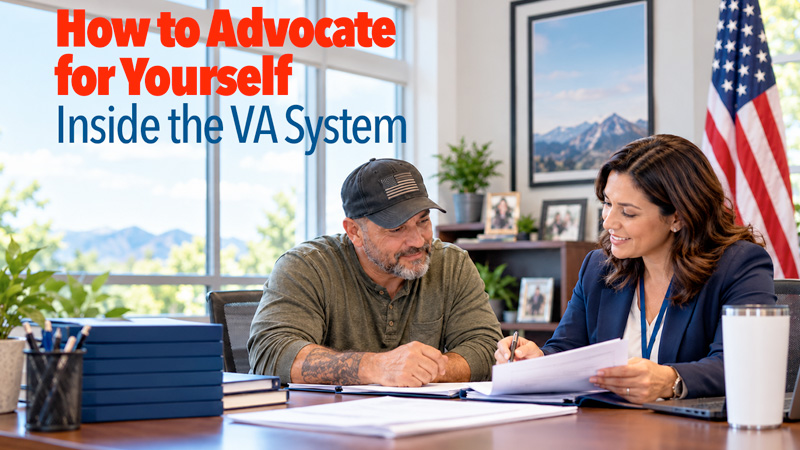
Start by trusting your own experience
The VA may question you. Contractors may misunderstand you. An examiner may rush you. But none of that changes what you have lived through.
You know what you felt then. You know what you deal with now. You know what has changed in your body, your sleep, your relationships, your work, and your peace of mind.
Self advocacy gets easier when you stop doubting yourself. The moment you trust your own experience, your voice naturally becomes steadier.
Speak clearly about what you need
A lot of veterans stay quiet because they do not want to sound demanding. But clarity is not disrespectful. It is self protection.
If something is confusing, it is okay to say you need it explained again. If something feels wrong, it is okay to say you disagree. If an appointment is unrealistic, it is okay to say it needs to be changed.
When you speak up, you are not asking for a favor. You are asking for fair process.
Protect yourself by keeping a simple record
You do not need a complicated system. A notes app or a small notebook is enough.
Any time you speak with the VA, a contractor, or an examiner, write down the date, the name of the person you spoke with if you have it, and what was said. If you made a request, note that too.
This protects you later if something gets misreported or lost. When you are tired, your notes hold the details for you.
Know where to call when something is not right
When an issue involves exams, scheduling, or anything connected to Compensation and Pension, the VA phone line matters because it creates a record that follows your claim.
Call 800 827 1000 and ask for the Compensation and Pension section. When you speak up there, it is documented, and that documentation can protect you.
Do not be afraid to submit a personal statement
Many veterans hesitate because they do not want to sound emotional or dramatic. But personal statements are often what makes the file feel real. They help the VA understand what your life actually looks like beyond a checklist.
You can describe symptoms, flare ups, work limitations, relationship strain, sleep problems, and the moments when things break down in daily life. You do not need perfect wording. You just need honesty.
Your truth is not too much. It belongs in the record.
Bring support when you need it
If appointments feel overwhelming, it is okay to bring someone you trust. A spouse, a friend, another veteran, anyone who helps you feel grounded.
Sometimes having someone beside you makes it easier to stay calm, remember what was said, and feel less alone in the process.
Never feel guilty for needing clarity
The VA system can be confusing. Many steps are not explained well. Forms are not written in plain language. Timelines change without warning.
So if you need something repeated, or you need more time, or you have questions, that does not make you difficult. It makes you responsible. Your understanding matters because you are the one living with the results.
If you want your file to speak clearly for you
Sometimes advocating for yourself is not only about what you say on the phone or in an appointment. It is also about making sure your VA file explains the connection the VA often claims it “cannot see.”
That is where a Nexus Letter can make a real difference. A well written Nexus Letter connects your diagnosis, service history, and medical evidence in plain, professional terms so your claim does not depend on one rushed exam or one person misunderstanding you.
It can also help correct weak reasoning in a denial, strengthen secondary condition links, and support a clearer effective date when you are pushing back on the VA’s decision.
If you want help figuring out whether a Nexus Letter would strengthen your specific case, reply to this email and tell us what you are currently filing or appealing. We will help you see your best next step, calmly and clearly.